Beyond the Page: The Office of Ordinary Things & Patagonia’s Boulder Guide Book
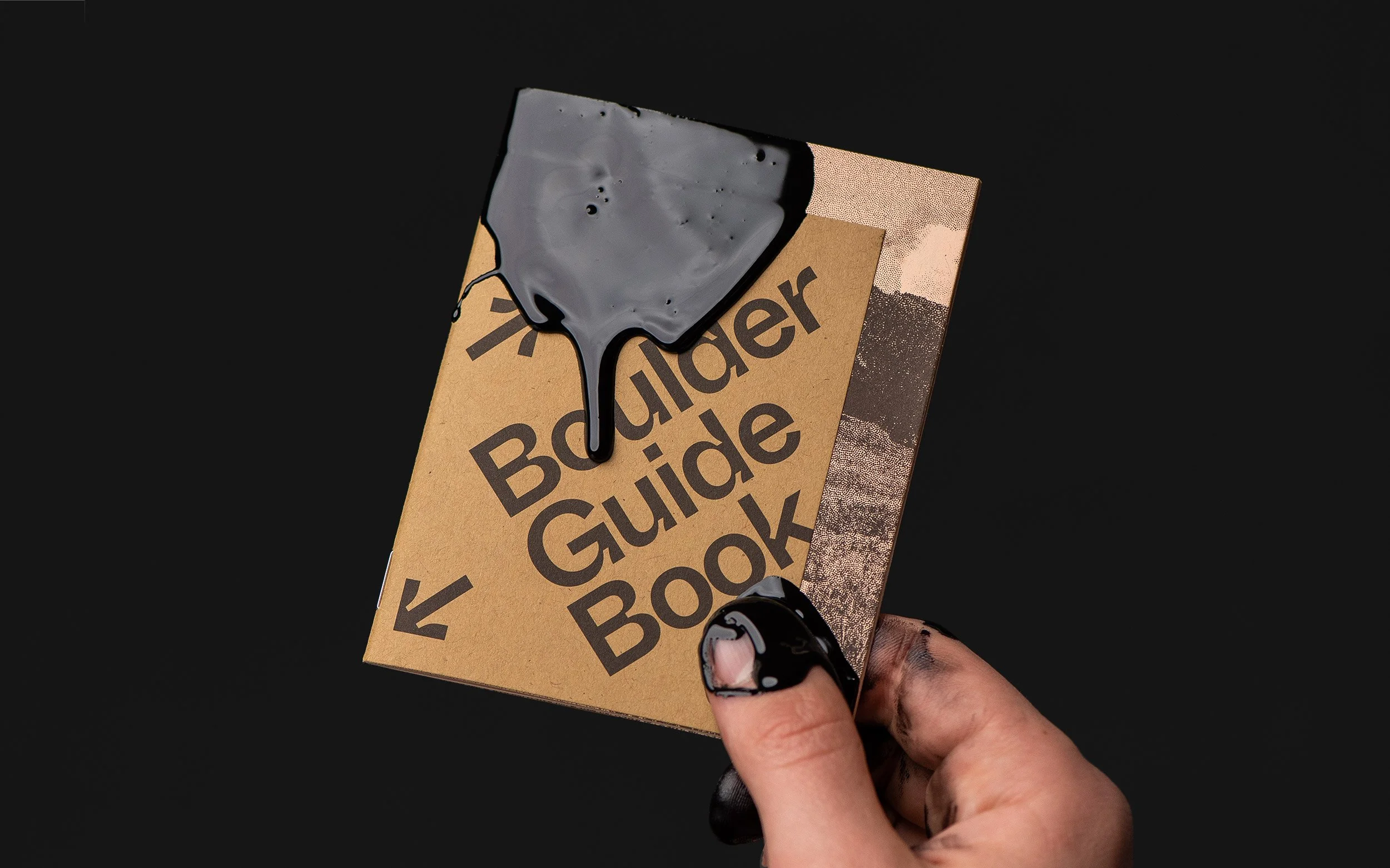
photo credit: The Office of Ordinary Things
At D&K Printing, we believe that high-quality design and environmental stewardship should never be at odds. We are thrilled to highlight one of our most meaningful collaborations to date: the Patagonia Boulder Guide Book.
Pushing the Sustainability Envelope
To bring this vision to life, we had the privilege of working with the brilliant minds at The Office of Ordinary Things (formerly Cast Iron Design) and their principal, Jonny Black.
Jonny and his team didn’t just design a beautiful, witty, and functional map—they challenged us to help them pilot a revolution in the pressroom.
The World’s First Algae Offset Ink
The standout feature of this project is the ink. While the industry has made great strides with vegetable-based carriers, the black pigments used in traditional printing are almost always derived from petroleum.
For the Patagonia project, we partnered with Colorado-based Living Ink Technologies to utilize their groundbreaking Algae Ink. This ink uses a carbon-negative pigment derived from spirulina algae waste. By swapping petroleum for algae, we were able to:
Sequester Carbon (The algae absorbs CO₂ as it grows, locking it into the pigment)
Reduce Fossil Fuel Reliance
Ensure Safety
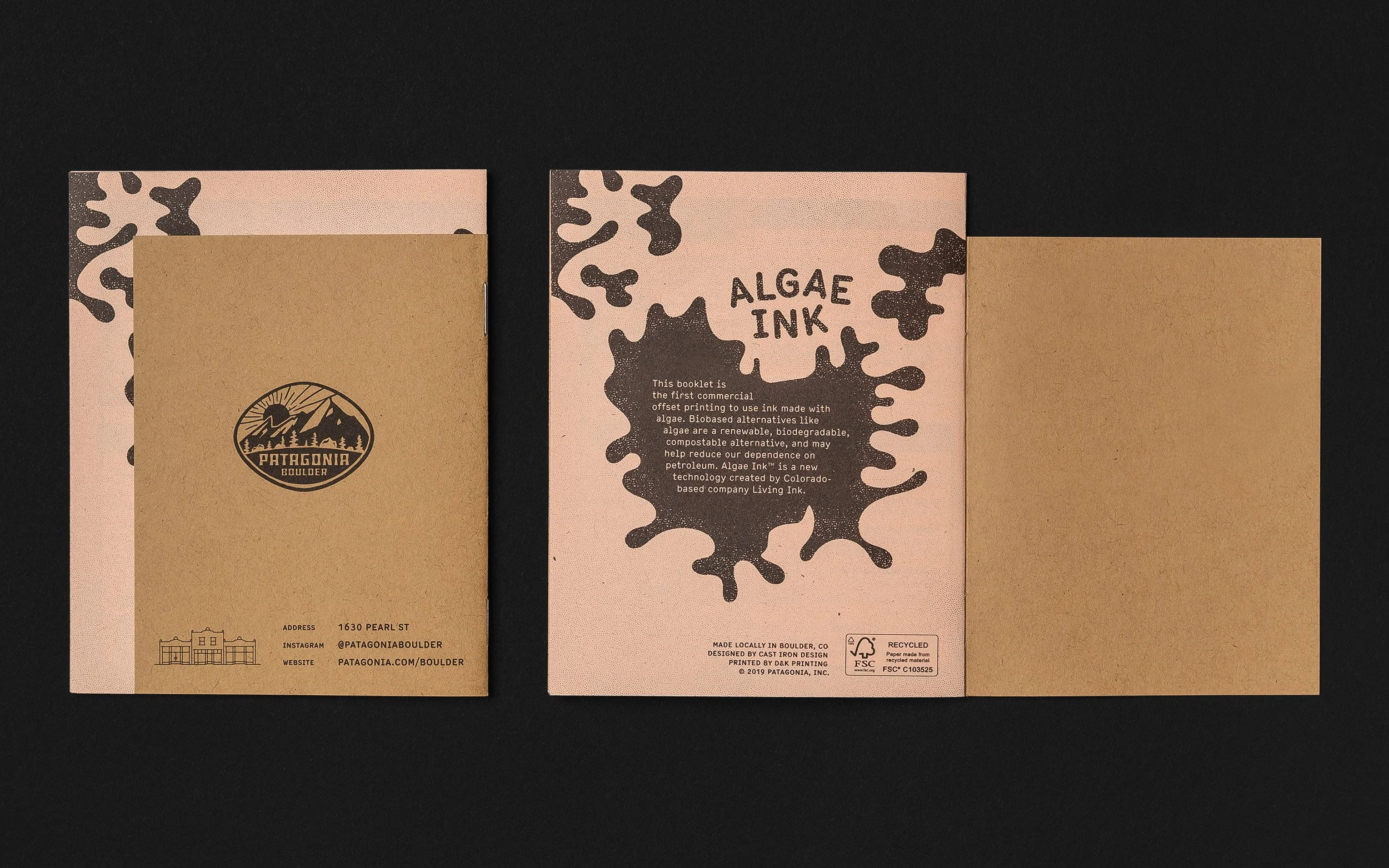
photo credit: The Office of Ordinary Things
A Masterclass in Eco-Design
Sustainability is about more than just ink. Under the art direction of Jonny Black, every element of the guide was considered:
Paper Choice: We printed on 100% Post-Consumer Waste (PCW) recycled paper (French Paper Co. Kraft-Tone), giving the guide a rugged, outdoorsy texture that perfectly mirrors Patagonia’s brand ethos.
Press Efficiency: By working closely with The Office of Ordinary Things, we optimized the layout to minimize paper waste and maximize press efficiency.
Purposeful Typography: To ensure the experimental ink performed perfectly, the design utilized specific typefaces like Hermes Condensed and Whyte Inktrap, designed to maintain legibility and crispness while minimizing ink usage.
Our Commitment
At D&K Printing, we pride ourselves on being the printer of choice for those who want to innovate. Taking the risk on a new ink technology for Patagonia was an easy decision because it aligns with one of our core missions: proving that sustainable printing is not only possible but superior.
A huge thank you to The Office of Ordinary Things and Jonny Black for their incredible creative vision and for trusting us to be their partner in this historic print run. Together, we’re showing that the future of print is green—or in this case, Algae Black.
Interested in using Algae Ink for your next project? Contact us to learn how we can make your brand’s print materials more sustainable.
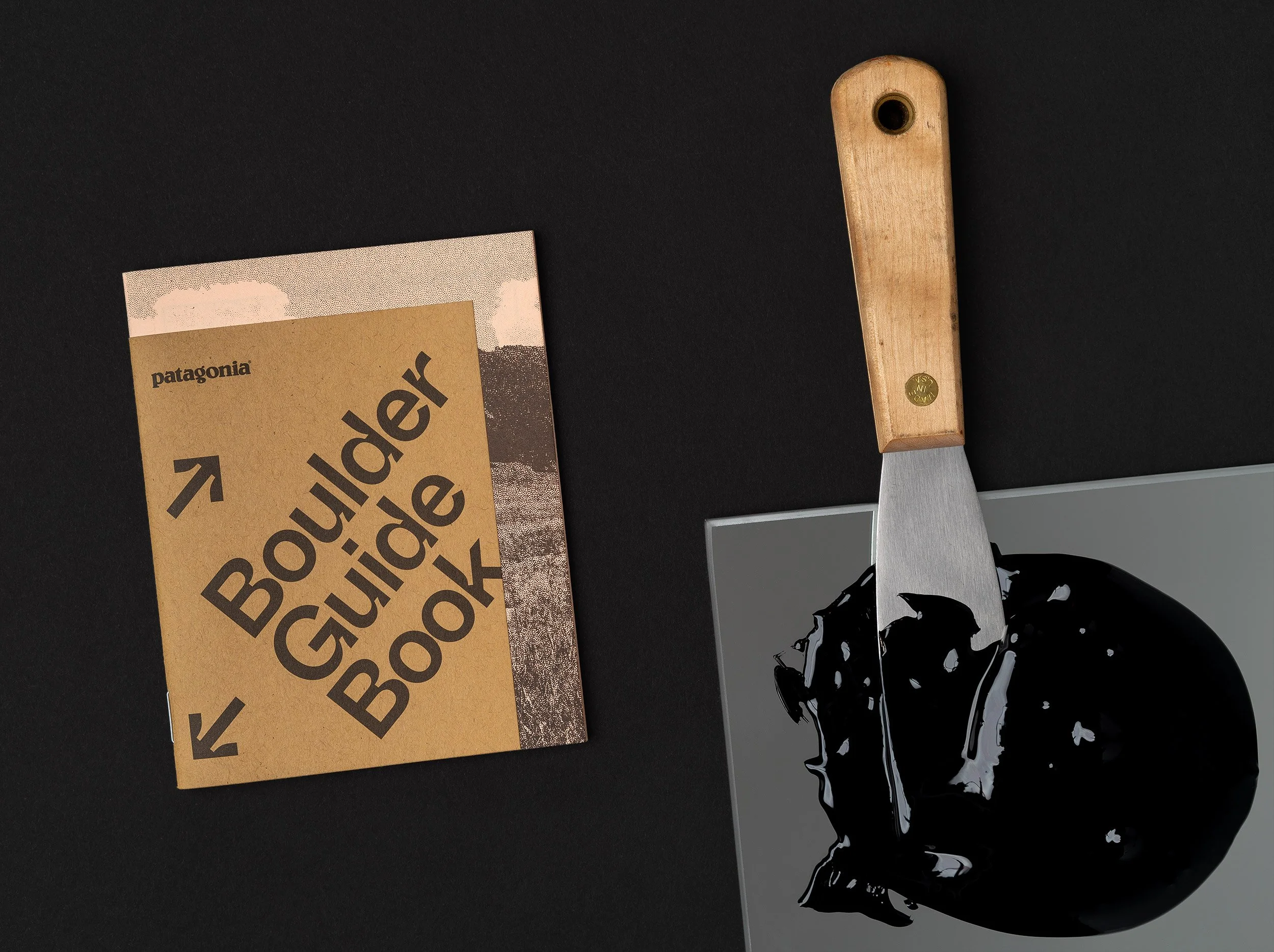
photo credit: The Office of Ordinary Things